far north aurora tours
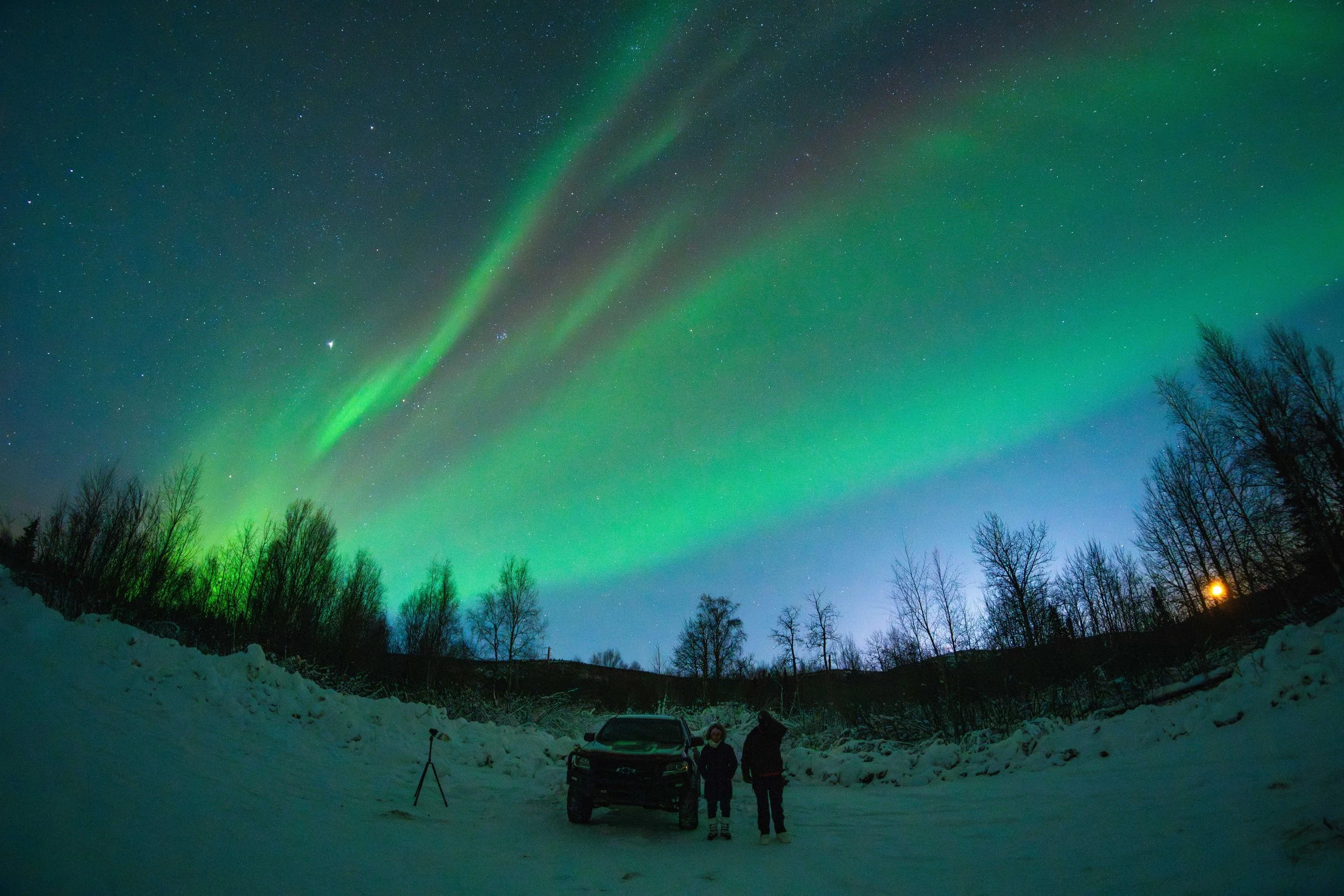
Join expert aurora guide and photographer, Riley Bregar, in Fairbanks, Alaska for a full night of chasing the Northern Lights!
Along the journey, he'll share with you the fascinating science of the aurora and pro-tips on capturing stunning images of the phenomenon. With over a decade of long exposure photography experience and a growing catalog of off-the-beaten path aurora viewing locations in Interior Alaska, his mission is to provide a peaceful and private aurora viewing experience and help you capture the best possible bucket list photographs from the Far North.
-
An intimate private tour with a maximum capacity of 3 guests
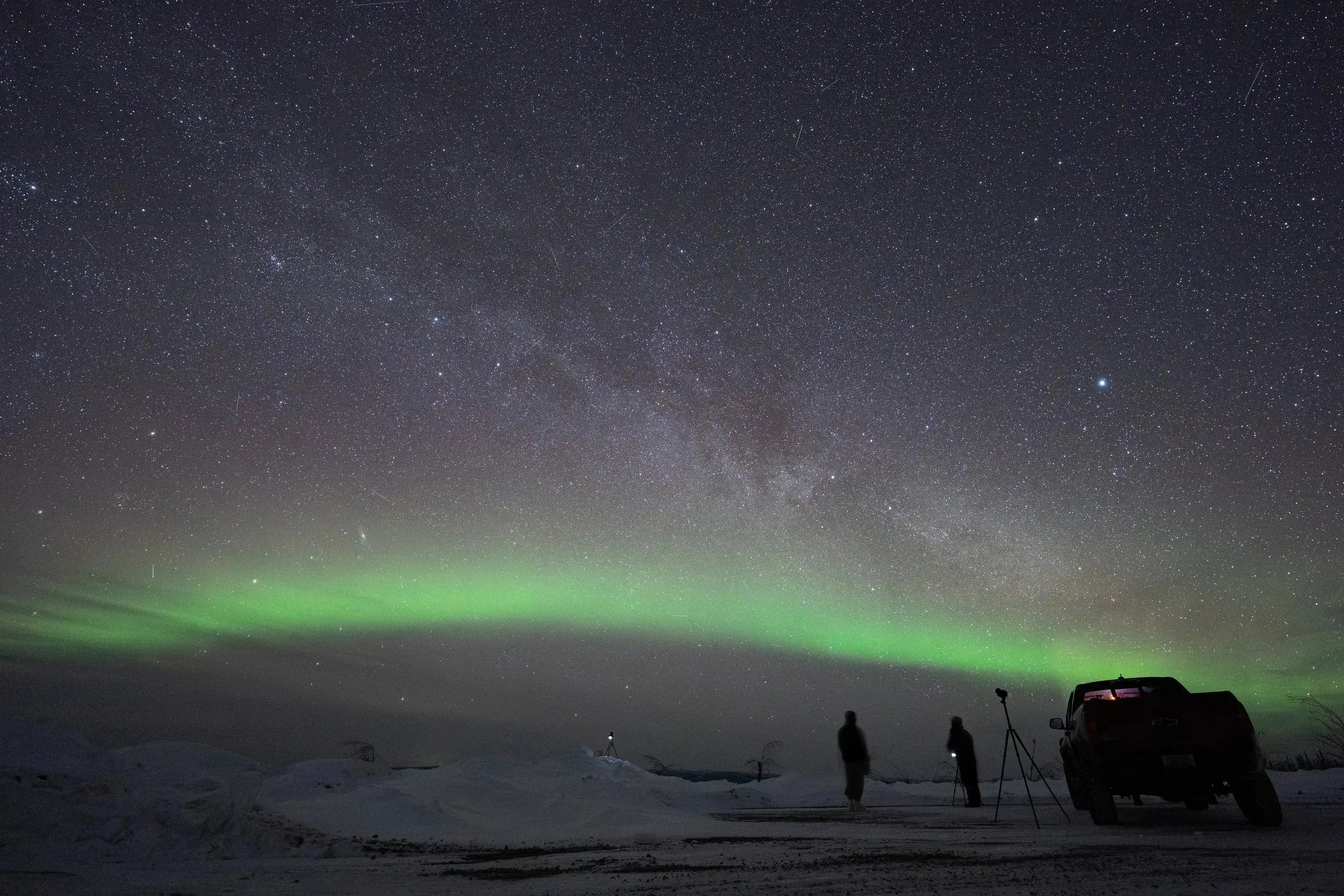
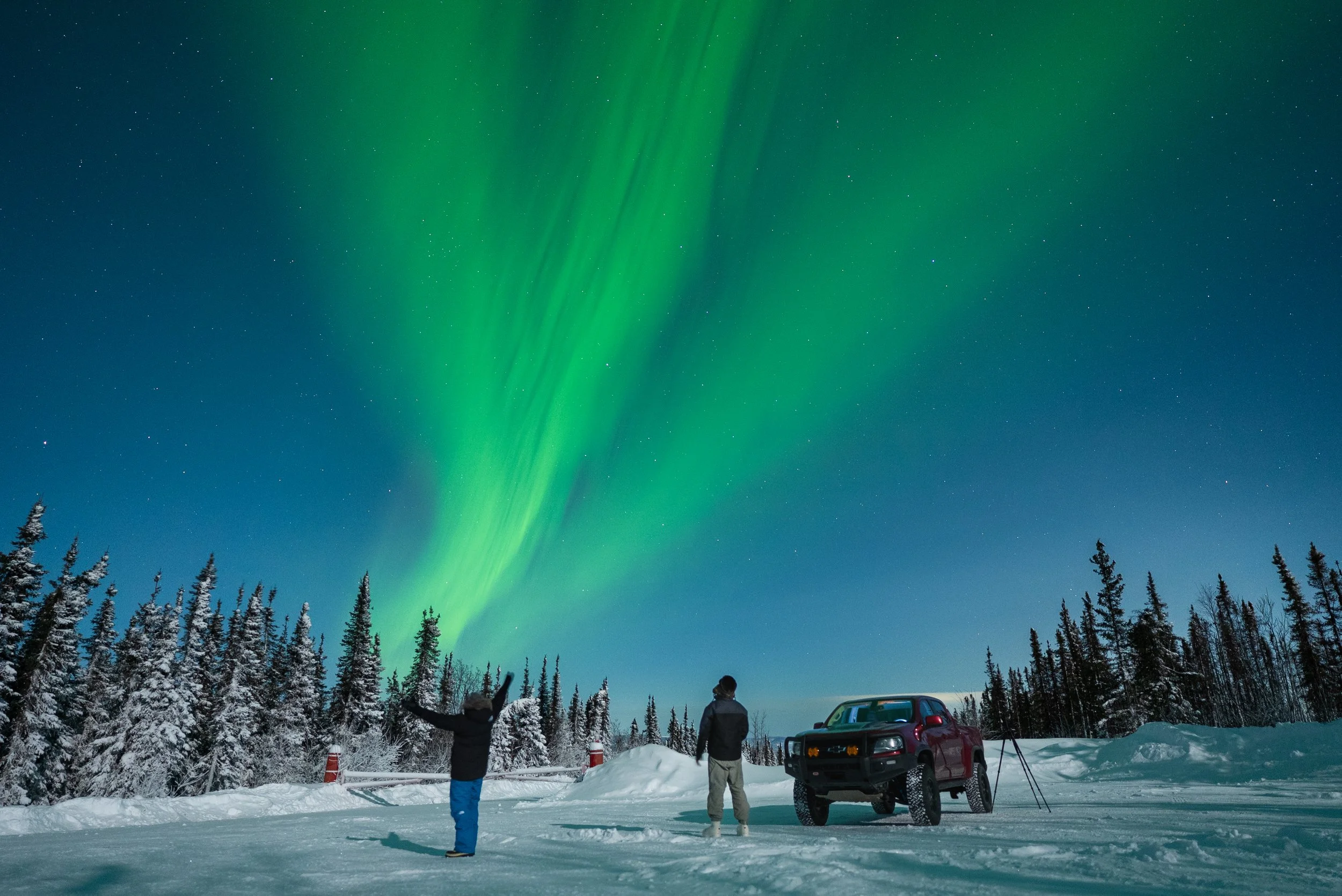
Transportation to uncrowded aurora viewing locations outside of Fairbanks
Pick up from your place of stay 1-4 hours after sunset (varies by season; specific pickup time will be confirmed within 24 hours of reservation date)
Drop off at your place of stay within 6-8 hours of original pick up time
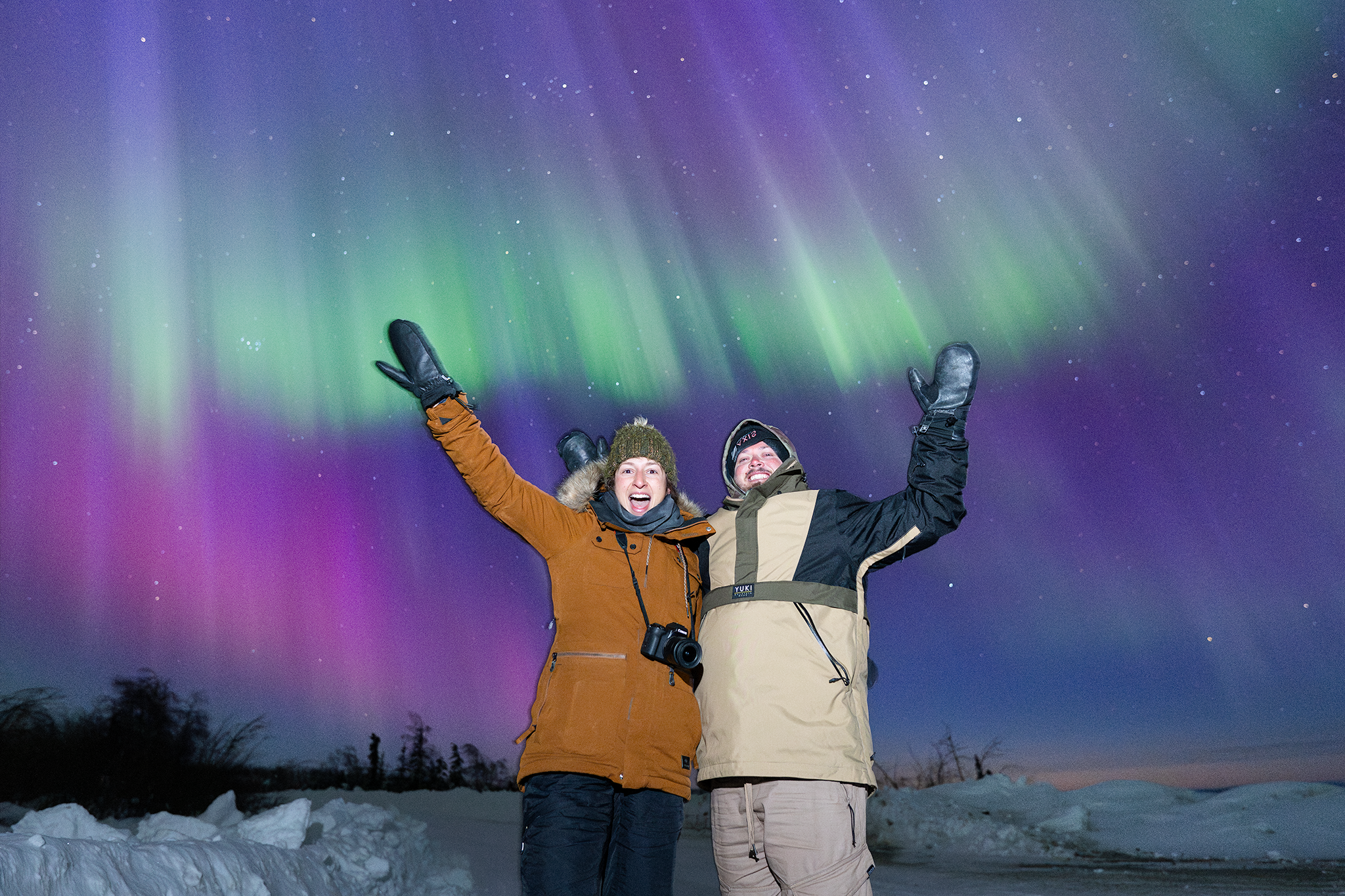
Professional photos of you and your group under the aurora
Photography tips suitable for all skill levels, from beginners to pros
Thorough explanation of the science behind auroras and the tools used to track them
-
Single guest: $495/ea
Multiple guests (2-3): $445/ea
-
This is a small group, intimate experience. In order to maintain a high quality of attentiveness during our tour, there is a limit of three guests per night. Accommodations can be made for up to four guests upon request.
-
This private tour is geared toward adventurous travelers and photographers of all experience levels, especially those traveling solo or couples looking for a personalized experience.
Wedding proposals are welcome!
Whether you are a photographer seeking optimal compositions from lesser visited locations or you’re simply looking for a private setting to create lifelong memories, this tour seeks to satisfy your desires.
About the Tour
FAQs
-
No! While I find great joy in sharing my love of photography with others, being a photographer is certainly not a requirement. In fact, most of my guests are more (rightfully-so) interested in absorbing the moment as they watch the aurora.
-
“Aurora Season” technically spans from about August 21 - April 21, when there is enough darkness of night to make the aurora clearly visible. While the long and cold nights of winter provide the most darkness to potentially view it, the autumn and spring seasons offer warmer temperatures and make the elements tolerable for longer periods of time. Additionally, the aurora is generally most active near the Fall (September 22) and Spring (March 20) equinoxes, when the tilt of Earth lines up its poles more directly with the sun, leading to more frequent linking up between the solar wind and Earth’s magnetic field, and thus, more active aurora.
Is there a best time to photograph the aurora in Alaska?
Each season has its perks, but any time when there’s dark and clear skies is a great time to experience and shoot it!
Fall (August-November), although often characterized by rainy days, the relatively warm temperatures and not-yet-frozen bodies of water that provide beautiful reflections of the night sky are attributes that should not be ignored. With little snow having yet fallen by this time of year, Fall allows for the most accessibility to viewing areas, which is beneficial for avoiding crowds and diversifying photo compositions. Additionally, the Fall equinox makes these months an ideal time to experience intense auroral activity.
Winter (December-February) gives a quintessential Alaska experience with potential for extreme cold and a snow covered landscape. Within winter months, temperatures can range from -40F to +40F. Proper extreme cold weather gear is essential. While winter travel is typically limited to routes that have been snow plowed, icy roads and snowy trees make for beautiful photo compositions.
Spring (March-April) with its relief from the often bitter cold of winter and increased auroral activity (on and near the equinox), is also an excellent time to book a tour. Temperatures will still be freezing and snow will still be present, but historically less inclement weather makes for clearer skies and high probability of aurora viewing.
-
I will closely monitor the weather in the days and hours leading up to our tour and will let you know by 8:00pm the night prior to your reservation date what the chances are of us finding clear skies. If the weather forecasted is imminently prohibitive for aurora viewing (rain, snow, overcast, etc.), I will offer you my next available tour date. If you are not available to accept another tour date, I will issue you a full refund.
Please note that refunds will only be issued for weather-related conditions. If you are forced to cancel for personal reasons within the 24 hour free-cancellation period, you will not receive a refund.
-
Your warmest layers: base layer pants and tops, mid layer fleece or sweatshirt, puffy down jacket
Hardshell jacket or parka
Snow pants (or similar insulated pants)
Your warmest boots along with wool socks
Your warmest gloves, wool glove liners (I will have extra arctic-rated mittens for use by students.)
Hand and toe warmers are highly recommended!
Beanie/warm headware
Neck gaiter/scarf
Note: We will be mostly stationary while outside gazing at the aurora. In order to stay comfortable, please follow these guidelines.
-
There will be no established facilities at nearly any of the locations at which we find ourselves. We’ll be in remote areas, far away from city lights and often far from any significant human development (other than roads). Therefore, if it becomes necessary to relieve yourself, plan to do so in a manner consistent with hiking or camping in a remote area. I will have appropriate supplies (toilet paper, wipes, trash bags, hand sanitizer, etc.) to accommodate as fully as possible.
-
Pickup times are generally within 1-4 hours of sunset, depending on season. As the weather forecast becomes more apparent within 24 hours of your reservation date, I will contact you and coordinate a specific pickup time.
-
Enthusiasm for sleep deprivation and patience for waiting for aurora to show itself!
Hand and toe warmers
Interchangeable lens camera (DSLR/mirrorless, full frame or crop sensor)
Wide/ultra-wide lens (12-24mm, maximum aperture preferred wider than f/2.8)
Sturdy tripod
Multiple memory cards (SD, CF Express, etc)
Extra camera batteries (cold weather often causes premature loss of charge for lithium batteries)
-
To maximize the probability of experiencing remarkable auroral activity, tours will last anywhere from 6-8 hours, depending on the drive time to the chosen viewing area and back to Fairbanks. Expect to spend 2-4 hours. Depending on auroral activity, weather, and your group’s tolerance for sleep deprivation, our tour may last longer than eight hours.
The aurora is commonly most active between about 10:00pm and 3:00am, with substorms (intense activity) potentially occurring roughly every 3-4 hours. So that we are given the best opportunity for a successful aurora viewing, you can expect to be picked up 1-4 hours after sunset (depending on season) and dropped off by 5:00am, or 5-8 hours after original pick up time. These times may be stretched or compressed based on your availability, weather, and auroral activity.
-
Short answer: lesser populated viewing areas within 1-3 hours of Fairbanks, away from city light pollution.
Long answer: My philosophy for experiencing nature is that it is best enjoyed with as little human interference as possible. In my personal adventures, I always seek out the most secluded yet accessible locations to enjoy nature and to practice photography; these tours are no exception. I always do my absolute best to share with my students the magical experience of seeing and capturing the aurora while avoiding popular and crowded areas where aurora-seeking tourists commonly congregate. In effort to find the clearest skies and most private viewing locations, we will venture anywhere from 1-3 hours from Fairbanks, depending on the current weather (clouds are not our friends). We may visit more than one location along our journey to maximize diversity in photo compositions.

Meet your guide, Riley.


“My intention is to share with others the experience of both witnessing and capturing the Northern Lights in peaceful and photogenic environments.”
Hi! If you’ve made it this far, thank you so much for your interest. Now, I’d like to introduce myself. I’m a nightscape and adventure photographer living in Fairbanks, Alaska. I’ve been practicing photography for around 18 years, with a serious commitment to craft for the last eight. I have always loved the outdoors and have blossomed as an adult, venturing out into nature at almost any opportunity, always with my camera on hand.
I was born and raised in Arizona and lived there until 2023, when I left my career in the power utility industry and moved to Colorado to pursue photography full-time. Throughout 2023 and 2024, I explored many remote and challenging hiking and 4X4 routes throughout the American West, including trails within Colorado’s Sangre de Cristo Mountains and Collegiate Peaks Wilderness, Utah’s Canyonlands National Park, Wyoming’s Medicine Bow and Black Hills National Forests, and many more.
In early 2024, I made the drive from Arizona to Alaska with my partner, Samara, who had just accepted a job in Fairbanks. Along that route, we saw the aurora for the first time and it blew me away. I immediately knew that it was a photographic subject that would only fuel my passion for capturing our night sky. Throughout 2024, I had several opportunities to experience the aurora borealis, two of which were severe geomagnetic storms in May and October, when I had the privilege of viewing it from Wyoming. I also was lucky enough to catch it in Alaska right at the cusp of the aurora season’s conclusion, in late April.
I visited Fairbanks for a total of about five weeks in 2024. During that time, Samara and I were determined to make the most of the daylight (in April and July) and explored as much of Interior Alaska as we could while I was in town. From driving the entirety of the famous (400 miles, largely dirt) Dalton Highway, camping at the base of the Brooks Range, and taking a dip in the Arctic Ocean, to driving and camping along the (135 miles, largely dirt) Denali Highway south of Fairbanks, we covered a lot of ground in 2024. Needless to say, the combination of seemingly endless wilderness to explore during Summer and the unmatched aurora viewing opportunities from Fall-Spring were plenty to convince me to relocate.
After making my second drive up here in November 2024, I was eager to start exploring on my own, but this time at night. I immediately employed the same style of exploration that I’ve been used to for much of my adult life: find places with as little human impact as possible, where nature can be enjoyed in peace and quiet. This was an especially important aspect of exploring the Fairbanks area, because of at least two things: the aurora is the most magnificent natural phenomenon I’ve ever experienced, and has the potential to boggle your mind and move you spiritually; and, this magnificence is no secret. Thousands of tourists flock to Fairbanks during Aurora Season, leading to “popular” viewing areas being overrun with tour buses and vans and their accompanying passengers, all of which inevitably introduce sound and light pollution. Since November 2024, I’ve been researching local maps and driving the highways surrounding Fairbanks in order to find what I consider to be secluded, quiet, and dark places with wide perspectives that allow for satisfying viewing and photographing of the aurora. I’m excited to share some of my favorite spots that I’ve so far marked, and I’m always adding more to my list!
That brings me to where I am today. While adventuring and exploring beautiful places is certainly one of my favorite activities, a core passion of mine is capturing those experiences through digital photography. As I mentioned before, the aurora has forever changed my perspective on photography. I’ve so far devoted more than a year to learning how to best capture the Northern Lights, which has drawn on concepts and knowledge from all of my prior years of photography experience to achieve. No matter the kind of photography you prefer, learning to capture the aurora will push the limits of your camera and take your understanding of long exposure photography to the next level. This evolution is something I’ve noticed in my own development and is something that has contributed to my continuously growing love for both photography and the aurora. My intention is to share with others the experience of both witnessing and capturing the Northern Lights in peaceful and photogenic environments.
I know this is a long-winded introduction, so I sincerely thank you for reading. I hope that my short story is sufficient to convince you to consider visiting somewhere in the world to view the aurora, whether it’s Alaska, Canada, Scandinavia, or elsewhere. It’s truly a life-changing experience that exemplifies the grandeur of our planet! I hope to share a night under the Lights with you soon!
Cheers,
Riley